
A structural audit runs faster, costs less, and produces a more useful result when the mine is ready for it. This checklist gathers the practical preparation a SIMM audit needs, drawn from the conventions of the SIMM Guideline for plant structures (AA TS 108 003 lineage). Use it to scope your own audit or to brief a provider. For the full condition-category and priority tables, see our SIMMS audits page. Where your mine's own standard or code of practice differs, your document governs.
1. Register and standard
- Confirm the structure register is current and lists every structure to be assessed.
- Agree the condition-category definitions and priority scale to be used (your standard or AA TS 108 003 aligned).
- Confirm the reporting templates the results must drop into.
- Identify the responsible plant engineer and the point of contact for critical findings.
2. Scope and access
- Define which structures are in scope and the level of inspection for each (primary members in detail, representative sampling for secondary and tertiary).
- Arrange safe access to high steel, no-access areas, and confined structures. Note where scaffolding, rope access, or drone and remote capture will be needed.
- Where possible, plan for at least one of every series of tanks or bins to be emptied, and silo material lowered, so internal condition can be assessed.
- Confirm induction requirements, personal protective equipment, and an accompanying person familiar with the plant.
- Give external inspectors at least two weeks' notice of scheduled inspection dates.
3. Structures to include
- Headgear, winder towers, and shaft steel.
- Plant and mill buildings, support structures, and platforms.
- Conveyor gantries, transfer towers, trestles, stackers, and reclaimers.
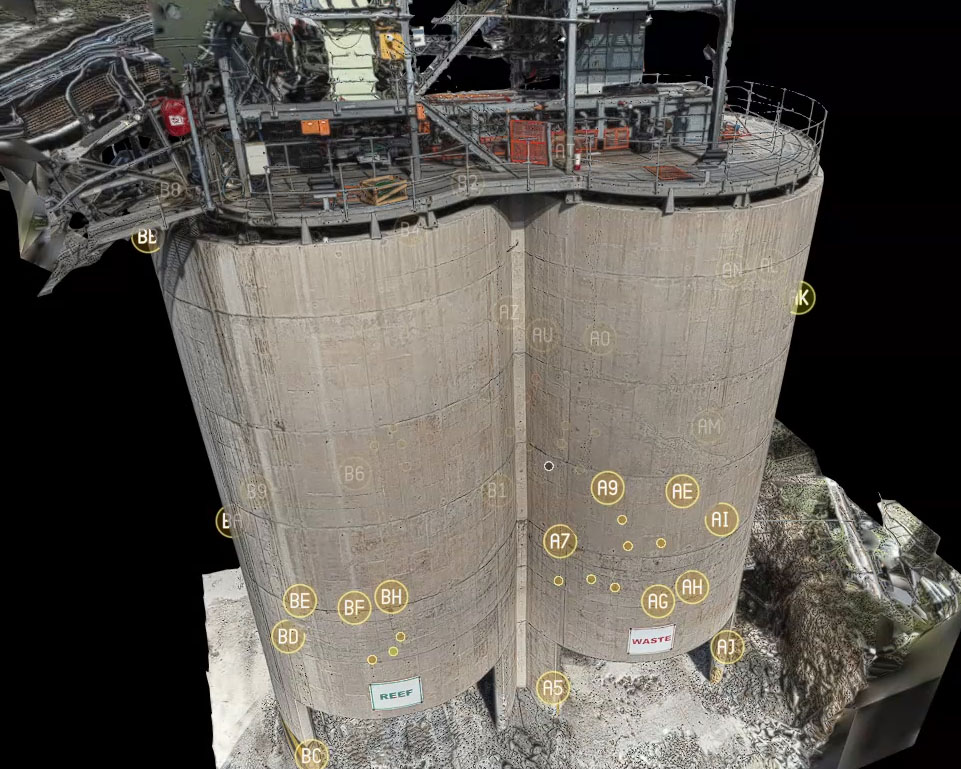
- Bins, silos, bunkers, chutes, and launders.
- Crane gantries and crane girders (with rail alignment and girder checks where cranes are in use).
- Steel flooring, stairs, walkways, and hand railing.
- Foundation plinths and holding-down bolts.
4. What the report must contain
- Date of inspection and the name and affiliation of the inspector or engineer.
- What was inspected and which portions of each structure.
- A condition category for every member or structure assessed, highlighting any category 4 or 5 findings.
- A prioritised list of recommended remedial actions with required dates.
- Clearly labelled photographs identifying typical members and their condition.
- A separate report of critical items (all category 4 and 5 findings and any safety-critical issue).
- A named, registered professional engineer's sign-off.
5. Critical-finding close-out
- Category 4 and 5 findings communicated to the plant engineer on the day of discovery.
- Immediate mitigation (propping, load reduction, barricading, or a production stop) in place within 24 hours.
- Work requests raised, with equipment number, description, impact, and required date.
- Close-out tracked to completion rather than filed and forgotten.
6. Cadence check
- Ordinary visual inspection of every structure at least once a year.
- Engineering visual inspection within two years of commissioning, then at condition-driven intervals not exceeding five years.
- Shorter intervals where condition is poor, until repairs bring the plant back to category 3 or better.
- A special inspection scheduled to quantify the deterioration after any category 4 or 5 finding, alongside the shortened re-inspection interval above.
If you would like this run as a signed structural engineering service, accelerated by drone and 3D capture so nothing on the register is missed, you can request a SIMMS audit proposal. It may also help to read what a SIMM structural audit actually involves.