





Core area 02

Engineering
Condition Audits

Engineering audits, not photograph books. A disciplined condition assessment of your structure, with advised repair methodology, material quantification, and compliance reporting. This is the capability page; for the South African service offer see structural condition audits in South Africa.

Trusted by
Sibanye-Stillwater Eskom Grindrod Debswana TotalEnergies
[01]

The problem
we solve.

Most structural inspection reports are photograph books with generic observations. They tell an owner what a defect looks like but not what to do about it, what it will cost, or whether it threatens compliance. Where failure carries safety, operational, or legal consequences, that is not enough.

Delta Scan delivers a structural condition audit you can act on. We combine UAV capture, advanced camera systems, and hybrid AI defect detection to inspect structures in a fraction of conventional inspection time. Findings are classified, measured, and turned into an engineering deliverable: what the defect is, where it is, how severe it is, the repair, the material needed, and where it sits against the applicable code.
[02]

Our
methodology.

Every condition audit runs in four phases.

  • Phase 1: Engineering scope. Owner interview, record review (original drawings, prior inspection reports, maintenance history), and definition of the standard the structure will be assessed against.
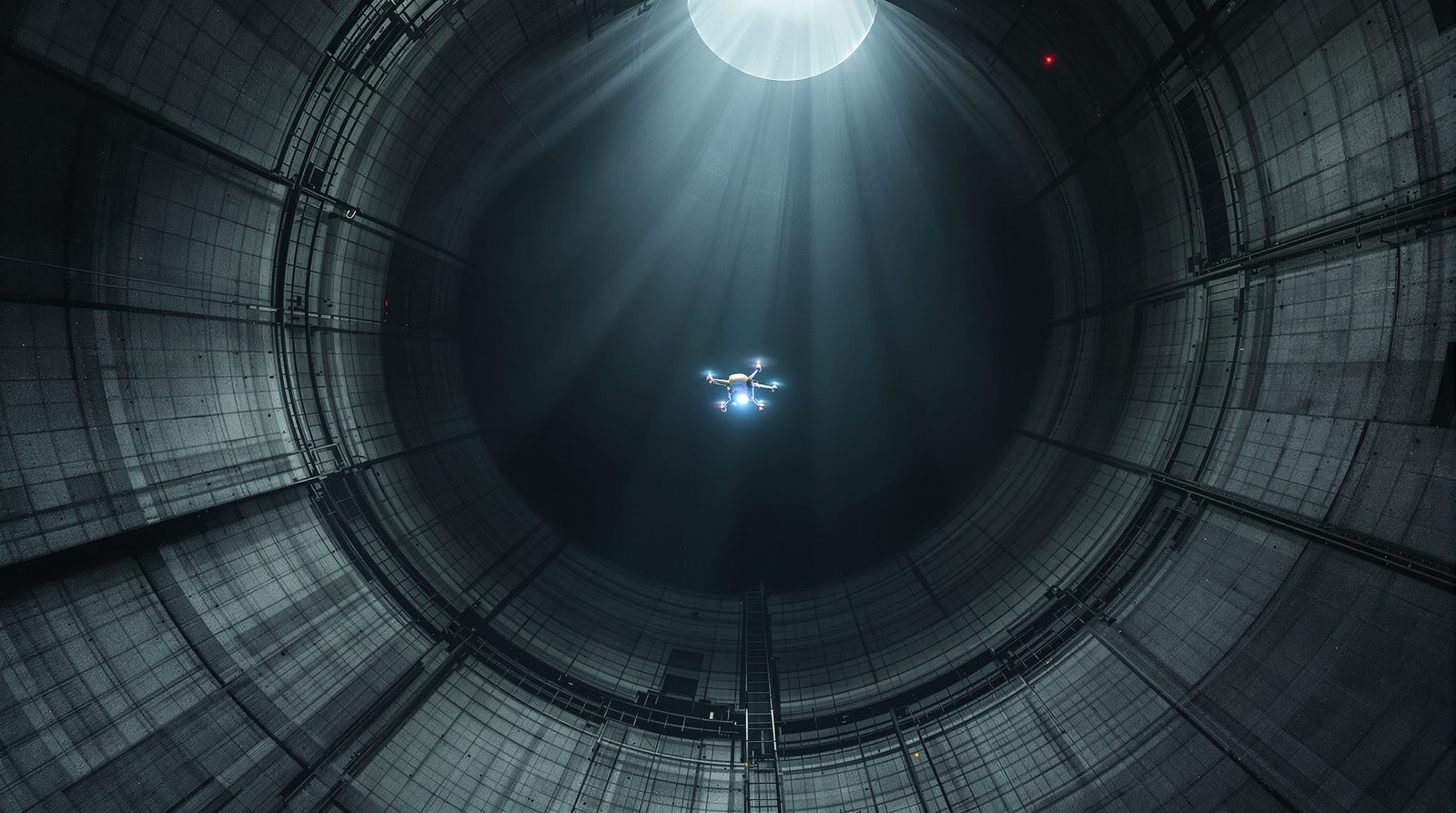
  • Phase 2: Capture. UAV, confined-space drone (Elios 3), 360-degree camera rigs, and handheld LiDAR as the asset requires. Planned to minimise operational disruption, under a safety plan signed by a registered engineer.
  • Phase 3: Defect detection and classification. Imagery and point cloud processed through our AI defect detection pipeline and engineer-validated. Each defect is located, measured, severity-classified, and referenced to the relevant code clause.
  • Phase 4: Audit report and delivery. Full engineering audit report with repair methodology, per-repair material quantification, compliance commentary, and a prioritised action plan. Reviewed and signed by a registered Pr Eng.
[03]

What you
receive.

A typical condition audit deliverable includes:

  • Executive summary with risk grading and prioritised action list
  • Complete defect schedule with location, dimensions, severity, and photograph or 3D reference
  • Repair methodology for each defect class, written to be tendered
  • Material quantification (concrete, rebar, coating) with wastage allowances
  • Compliance commentary against relevant SANS, Eurocode, or client-specific standards
  • 3D asset model with defects overlaid, delivered via DeltaCloud
  • Recommended re-inspection interval and monitoring plan
  • Pr Eng letter of certification where required for insurance or regulatory submission
Inside a deliverable

Engineering audits, not photo books.

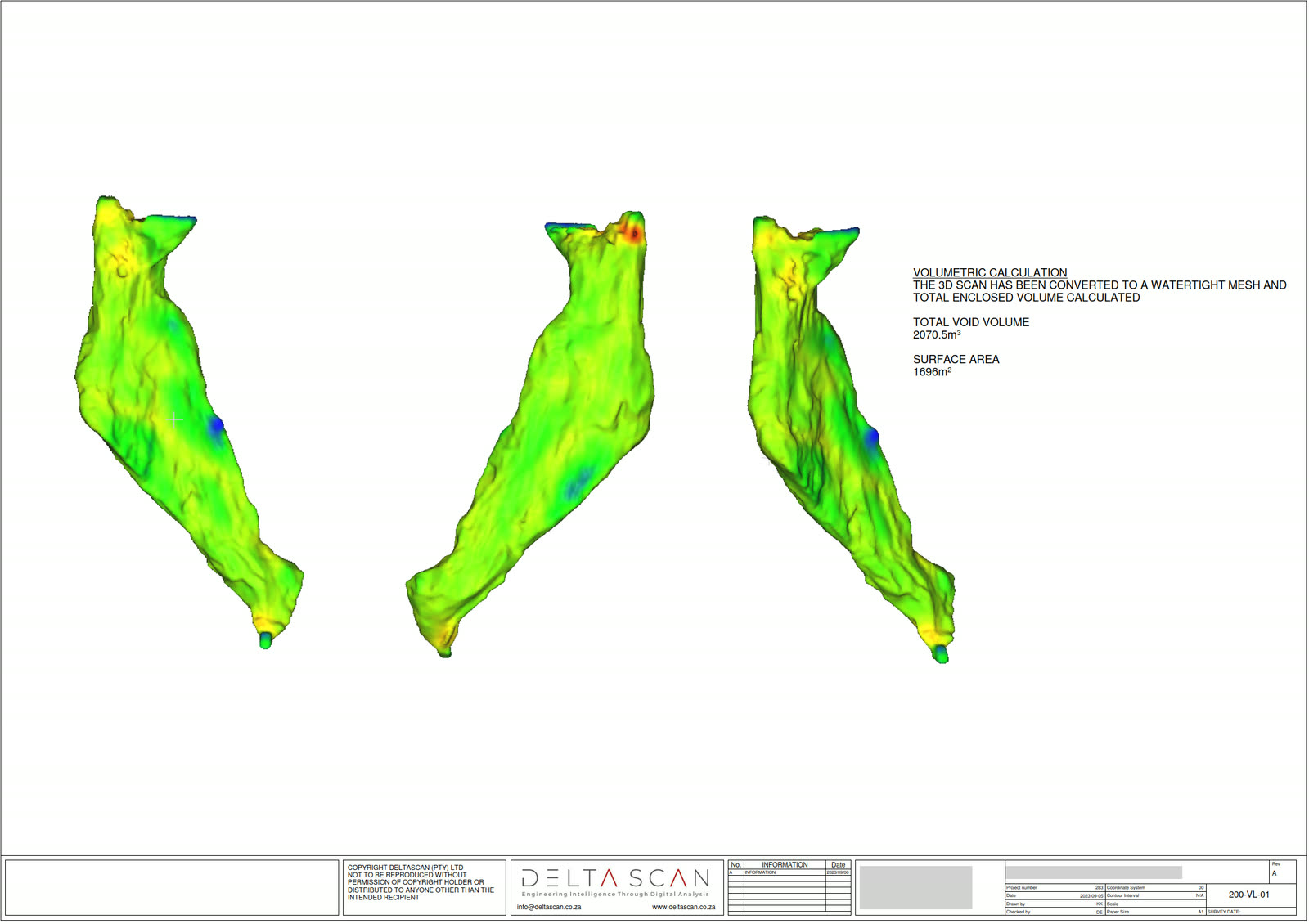
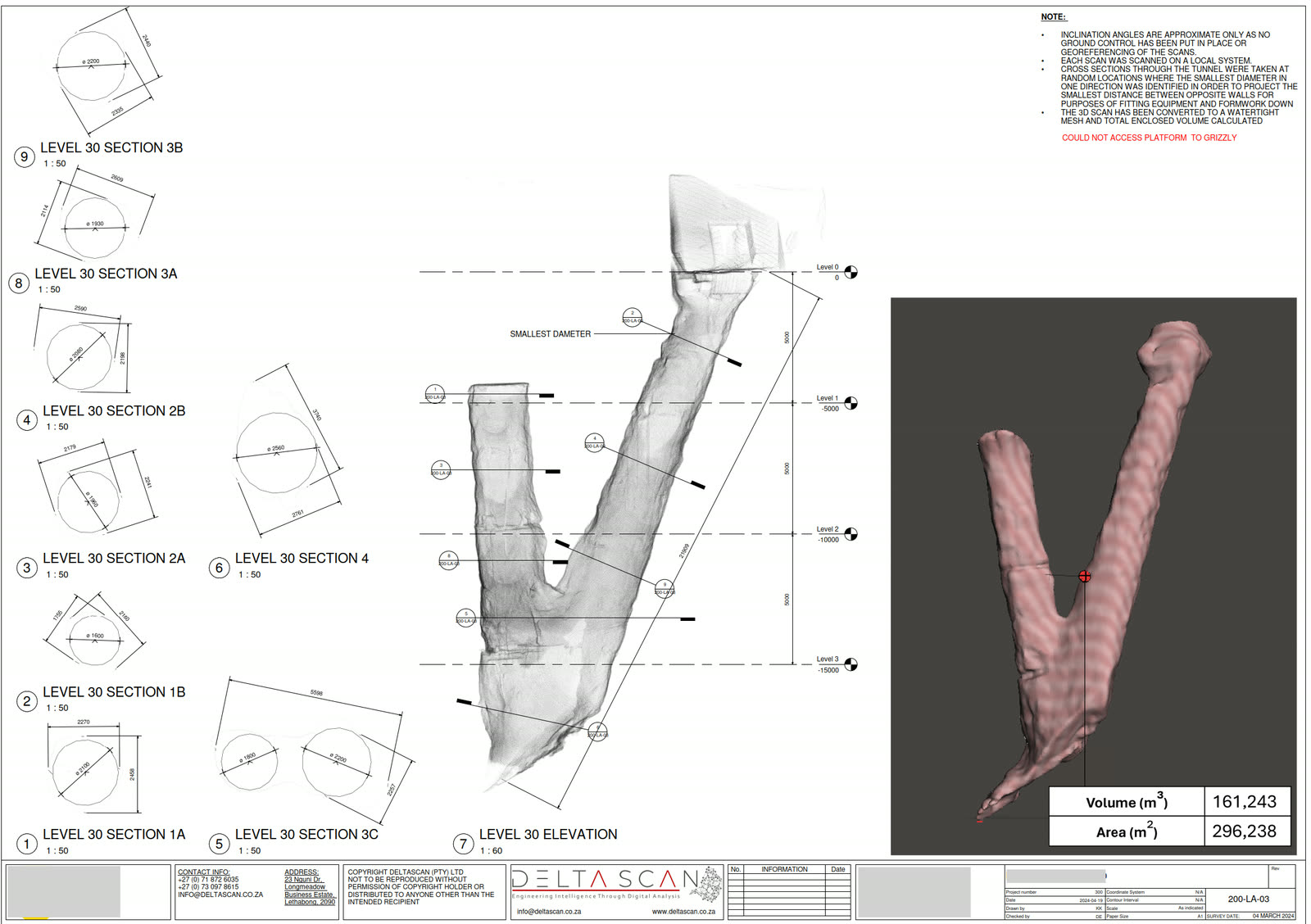
A condition audit is a measured, signed engineering document. Real outputs: dimensioned cross-sections, volumetric and tolerance checks, and navigable digital twins of the inspected asset.

[04]

Equipment
& standards.

Equipment

  • Flyability Elios 3 collision-tolerant drone with integrated LiDAR for GPS-denied environments
  • DJI M350 RTK with H20T thermal camera, L2 LiDAR, and P1 photogrammetry payload
  • NavVis VLX3 for mobile indoor mapping of complex industrial spaces
  • Omnispect 360-degree video platform for linear and confined-space asset review
  • Custom AI defect detection models, sector-tuned to the asset class

Standards & compliance

Audits conform to SANS 10160 structural loading, SANS 10100 structural use of concrete, SANS 10162 structural use of steel, and relevant international standards including Eurocode and ASTM. For specialised asset classes we work to industry-specific codes: TMH series for road infrastructure, CIRIA guidance for industrial structures, and client-specific standards on request. The Pr Eng certification on the final report names the applicable standards explicitly.

[05]

Where
it applies.

  • Concrete and steel silos, and cooling towers
  • Industrial and commercial bridges, piers, culverts
  • Smokestacks, chimneys, and flare stacks
  • Storage tanks, pressure vessels, and confined-space assets
  • Mine headgear and shaft structures (see Shaft Analyser for vertical shaft work)
  • Process plants, refineries, and industrial roof structures
  • Building envelopes and facades
[06]

Questions
we hear often.

Straight answers to the questions clients ask most before engaging us.

How is this different from a drone survey?
A drone survey captures data. A condition audit interprets that data through an engineering lens and delivers an audit report with repair methodology. The drone is a tool; the engineering discipline is the deliverable.
Will we need to shut down the asset?
Usually not. Our methodology minimises operational disruption, and any shutdown requirements are agreed during scoping.
How often should an audit be repeated?
The audit report recommends re-inspection intervals based on asset class, environment, and defect severity. Typical intervals range from annually for harsh environments to every five years for benign conditions.
Do you provide repairs?
No. We stay independent of the repair supply chain to protect the engineering judgment in our audits. We will review tenders or provide supervisory oversight during repair execution.
Inside a deliverable

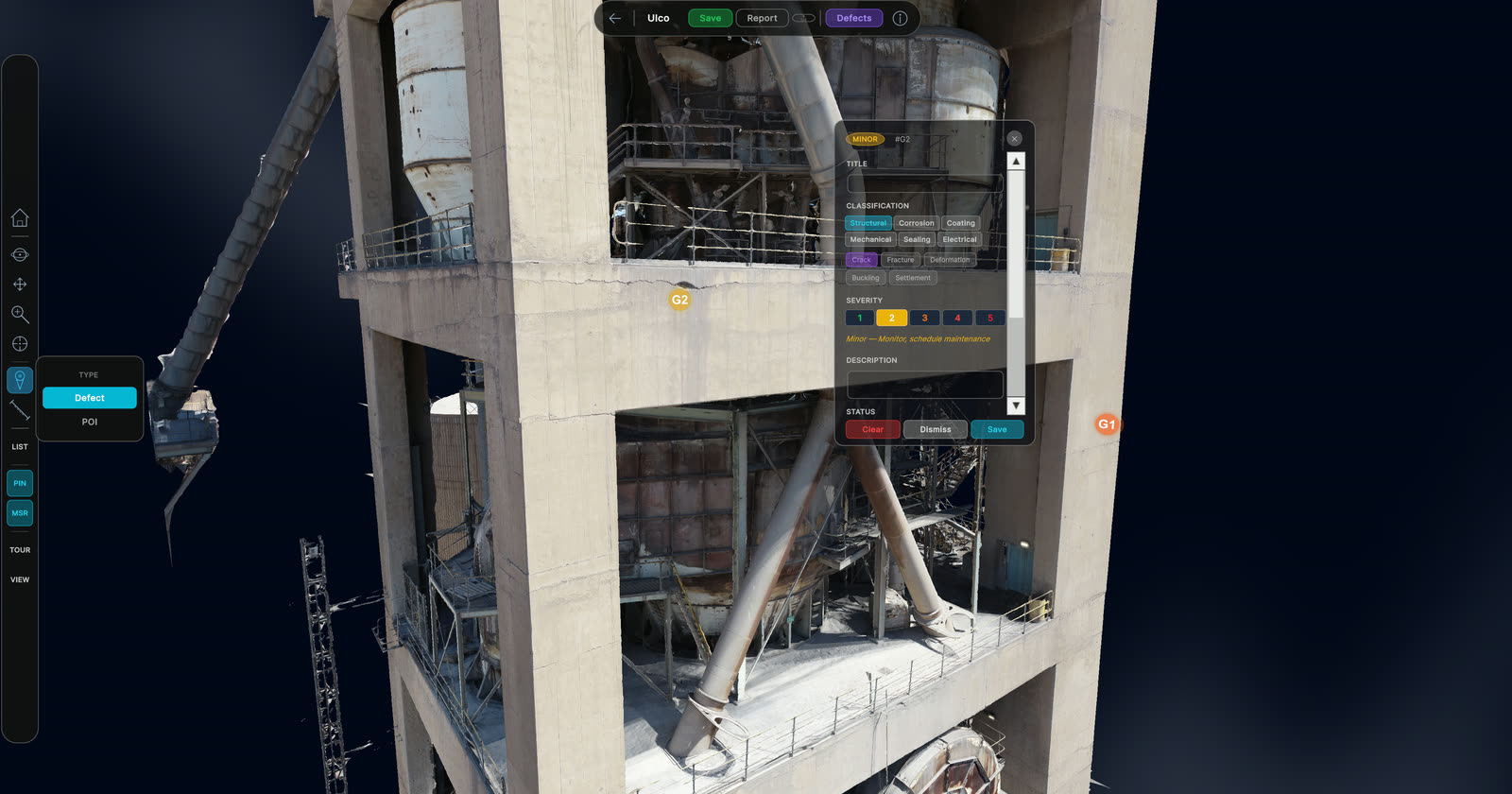
A defect, classified and signed off.

A navigable digital twin in DeltaCloud showing the defect classification panel, severity rating, and a tagged defect Save · Report · DefectsDefect classification & severityTagged defect (G2)Measure & tag tools
A live digital twin: classify the defect, set severity, measure, and tag it to a location. Every tag and edit is access-logged, and the finding is reviewed by the responsible Pr Eng before the report is signed.
Accuracy & standards

Built to be signed, not just shared.

Pr EngECSA 202001436

Every engineering deliverable is reviewed and signed by Darryl Epstein, a registered Professional Engineer (Pr Eng, ECSA 202001436).

SAGIsurvey

Geospatial deliverables carry registered land-surveyor sign-off where accuracy must be certified.

Classstated

Every deliverable carries a stated survey accuracy class or BIM level of development (LOD), reported per engagement against check-point analysis.

Standardscited

Findings cross-referenced to the applicable codes (SANS, TMH, EN), with accuracy statements on every report.

Start here

Start an Engineering Condition Audits engagement

Send the brief and our engineering team will review your enquiry and reply within one business day. Prefer to talk first? Call or WhatsApp us below.

Response within 1 business day · Pr Eng or SAGI signed

Start a project Call