





Specialised Service

Concrete Scanning and Rebar Detection in South Africa

Know what is inside the slab before you cut. Ground penetrating radar locates rebar, post-tension tendons, conduits, and voids, and maps cover and thickness, with no coring and no damage.

Trusted by
Sasol Eskom Impala Platinum Sibanye-Stillwater Afrimat Growthpoint Concor Stefanutti Stocks Zutari Infrastructure South Africa
In short

Concrete scanning uses ground penetrating radar to locate rebar, post-tension cables, conduits, and voids inside concrete before cutting or coring. Delta Scan maps cover and slab thickness and marks safe cutting zones on the surface, all without breaking or damaging the element.

Concrete scanning uses ground penetrating radar to see inside a concrete element before anyone cuts, cores, or drills it. A handheld scanner is moved across the surface and reads back the position and depth of reinforcing bar, post-tension cables, electrical conduits, voids, and the thickness of the slab, all without breaking the surface. The result is a marked-up map of exactly what is hidden in the concrete and where it is safe to cut.

The reason to scan first is simple: striking a rebar, a live conduit, or a post-tension tendon during coring is dangerous, expensive, and in the case of post-tensioning can compromise the structure. Delta Scan delivers concrete scanning as a standalone service for contractors and as part of a wider structural condition audit, where the same data informs cover, slab thickness, and reinforcement-layout findings for the engineer.
When to use it

Typical engagements.

Each scenario below represents a real-world trigger for this service. If your situation matches one of these, get in touch.

Before coring, cutting, or drilling

The most common use. Any penetration of structural concrete should be preceded by a scan to confirm there is no rebar, post-tension cable, or live conduit in the path. Scanning turns a blind, high-risk cut into a controlled one.

Structural investigation

Where original drawings are missing or unreliable, scanning maps the actual reinforcement layout, concrete cover, and slab thickness. This feeds condition assessments, load-capacity checks, and the design of alterations or strengthening.

Quality assurance of new work

Scanning newly placed elements verifies that bar spacing, cover, and position match the design and specification before the work is signed off or covered by finishes.

Void and anomaly detection

Radar identifies honeycombing, delamination, and voids behind or within concrete, including under slabs and behind walls, that would otherwise stay hidden until they cause a failure.

How it works

Our process.

A repeatable five-stage workflow. The same disciplined sequence runs whether the site is a 500-hectare mining operation or a single 60-metre bridge.

01

Scope and access

We confirm the elements to be scanned and what you need to find, whether you are about to core or investigating condition, and arrange surface access. Scanning needs a reasonably clean, reachable face.

02

Surface scanning

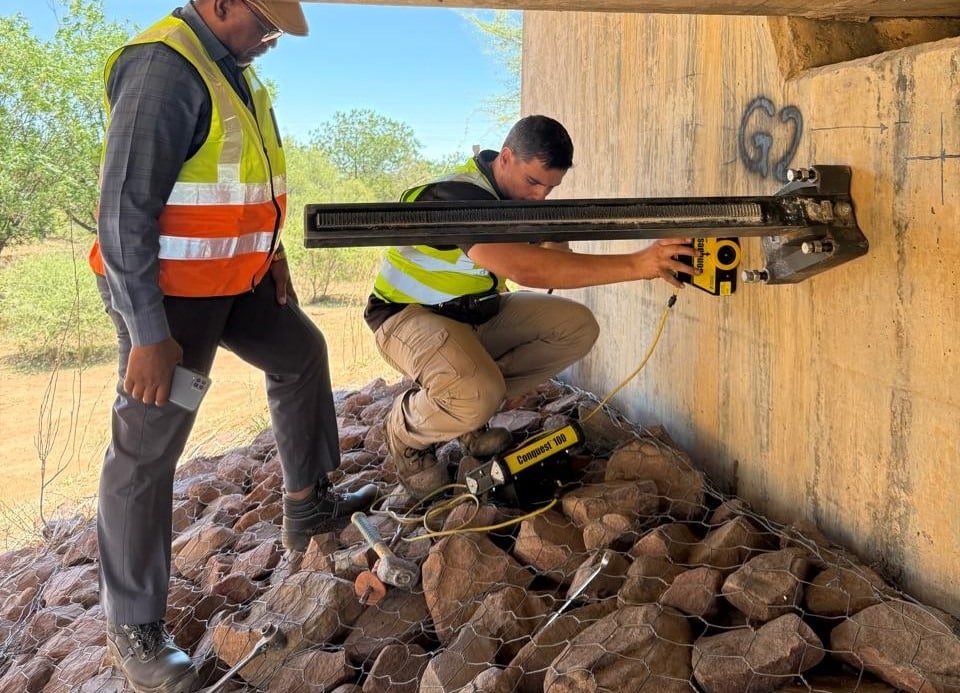
A handheld GPR scanner is moved across the element in a grid. The radar reflects off rebar, cables, conduits, and interfaces, building a real-time subsurface profile of the concrete as the operator works.

03

On-site marking

Where the purpose is a safe cut, targets are marked directly on the surface there and then, with clear zones identified, so the contractor can core or cut with confidence before the team leaves site.

04

Interpretation

For investigation work the scan data is interpreted into rebar layout, cover depth, slab thickness, and any anomalies, located on a plan of the element rather than left as raw radar traces.

05

Deliverable

You receive a concise scan report with annotated images, the locations and depths of detected features, and clear-zone recommendations. Where the scan supports a condition audit, the findings flow into the engineer-signed report.

Request a concrete scanning quote Explore ground penetrating radar
Equipment

What we use.

Calibrated, sector-matched hardware combined with proprietary software. The capture stack is selected for the asset, not the other way around.

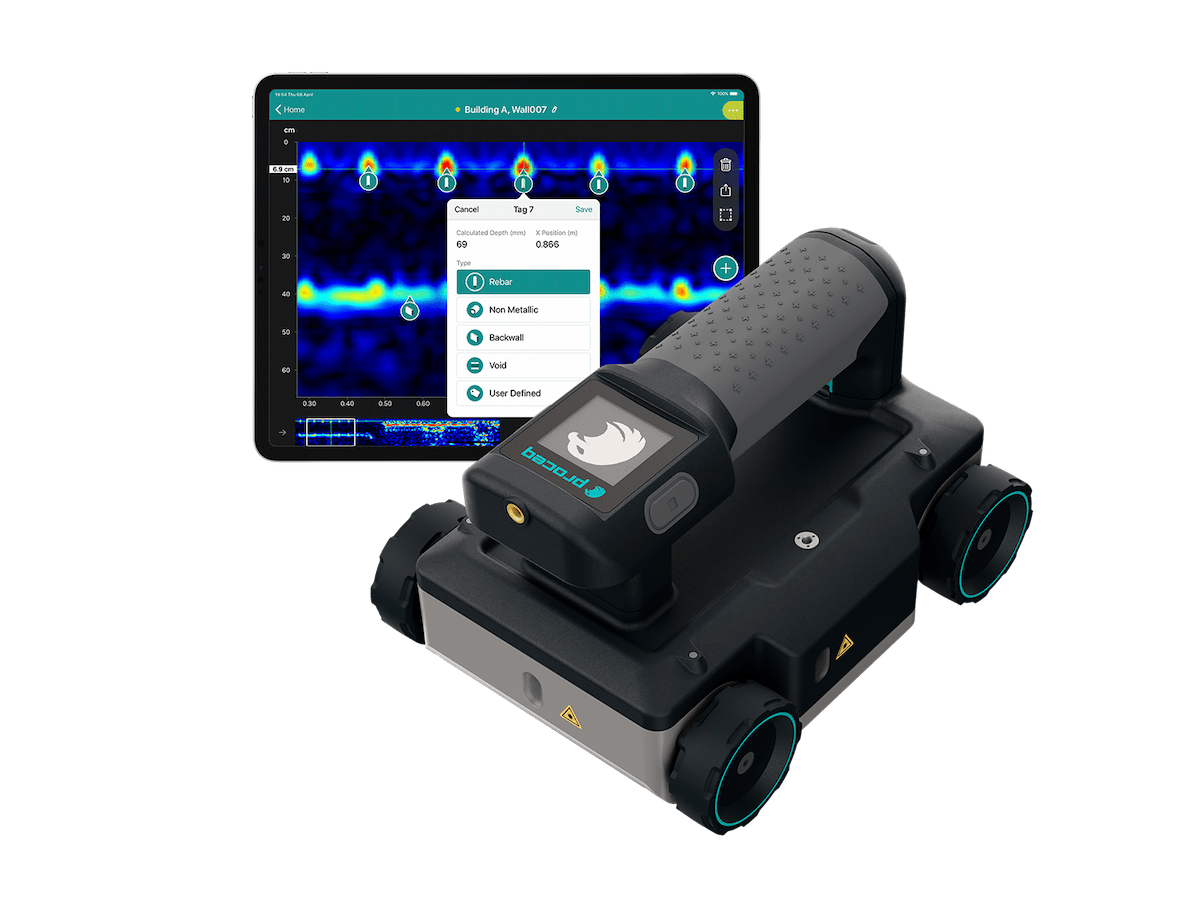
Proceq GP8000

Proceq GP8000

Concrete and rebar GPR for cover, slab thickness, rebar layout, and structural anomaly detection

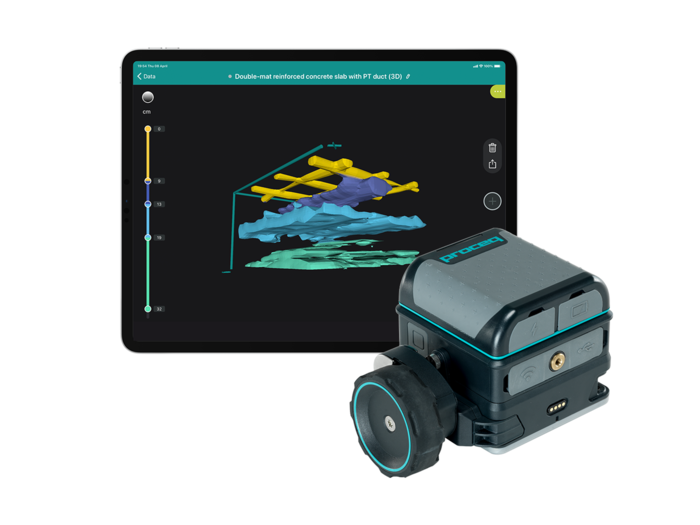
Proceq GP8800

Proceq GP8800

High-resolution concrete GPR for dense reinforcement, post-tension, and detailed structural scanning

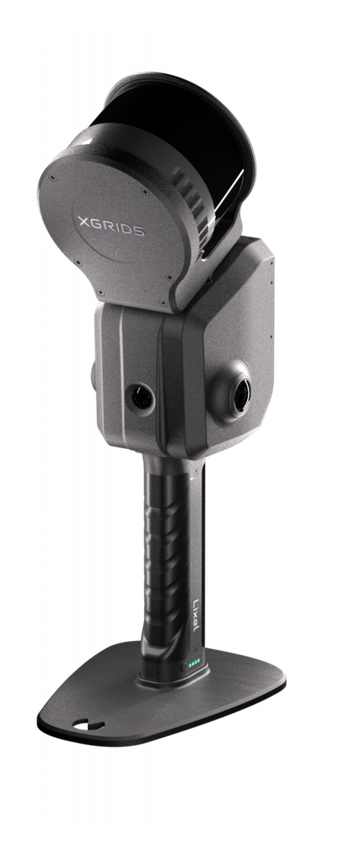
Handheld GS scanner

Handheld GS scanner

Portable radar for rapid rebar location and clear-zone marking ahead of coring and cutting

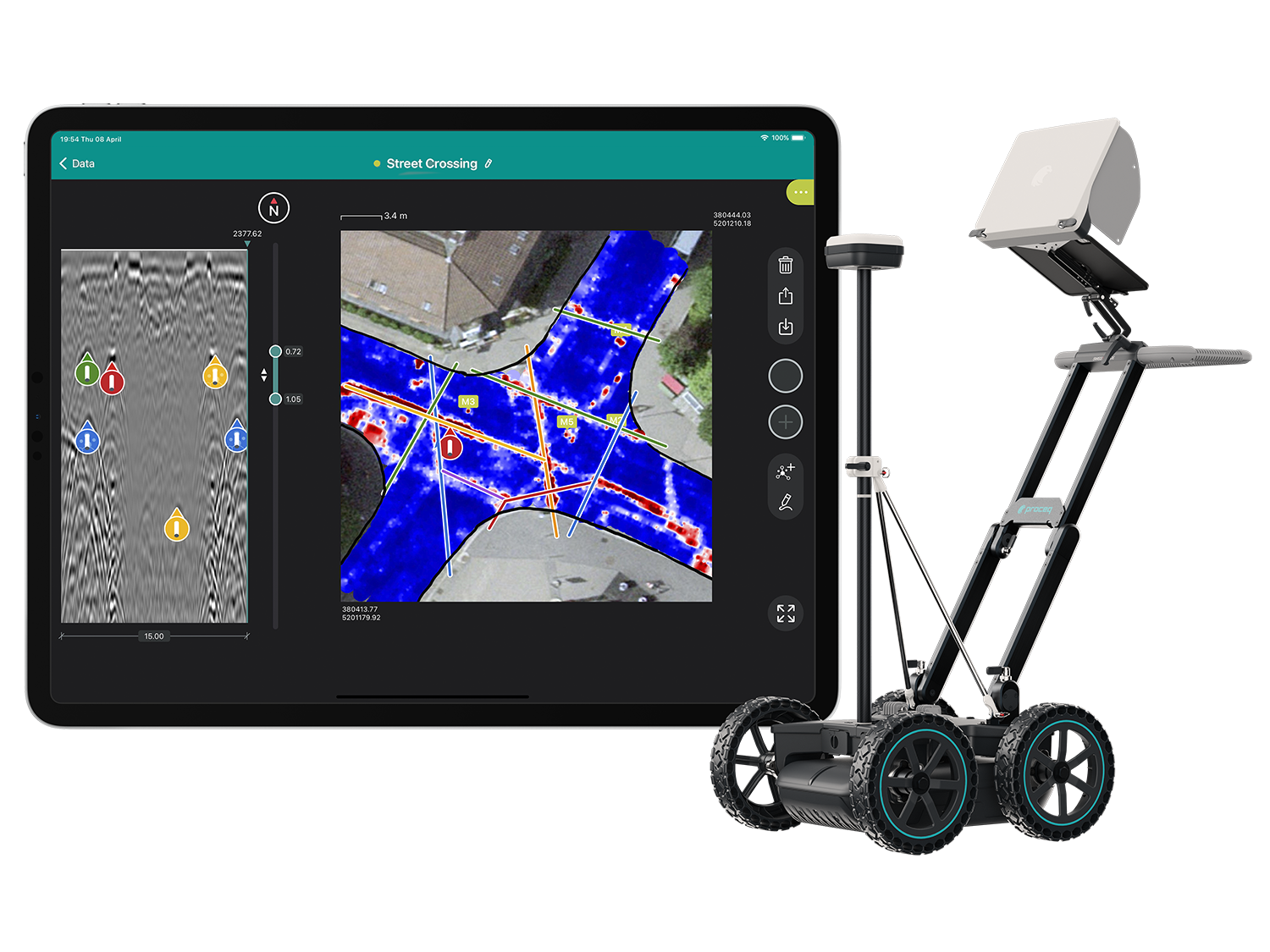
Proceq GS8000

Proceq GS8000

Cart-based GPR for larger slabs, ground slabs, and the transition to subsurface utility detection

Sectors

Where this fits.

The same engineering discipline applies across Construction and Built Environment, Infrastructure, Industrial and Process, Mining. The detail changes with the asset class and the operational context.

Construction and Built Environment

Coring and cutting clearance, slab and beam investigation, fit-out alterations, and structural QA on new builds

Infrastructure

Bridge decks, parking structures, reservoirs, and culverts scanned for rebar, post-tension, cover, and deterioration

Industrial and Process

Plant floors, plinths, and foundations scanned before fixings, penetrations, and equipment installation

Mining

Concrete structures, headgear bases, and processing-plant foundations scanned for alterations and condition assessment

FAQ

Frequent questions.

Direct answers to the questions clients ask most often before engaging.

How deep can concrete scanning see?

Modern concrete GPR reliably images the full depth of most structural slabs and walls, typically around 300 to 600mm depending on the concrete and the antenna used. Rebar cover and the first reinforcement layers, which is what matters most before coring, are resolved very clearly.

Can you find post-tension cables?

Yes, and it is one of the most important reasons to scan. Cutting a post-tension tendon can be dangerous and can compromise the structure. GPR locates tendon ducts and reinforcement so a core or cut can be placed safely between them.

Is concrete scanning non-destructive?

Completely. Ground penetrating radar reads the concrete from the surface without touching the reinforcement or breaking the element. There is no coring, no drilling, and no damage to confirm what is inside.

Do you mark up where it is safe to cut?

Yes. For coring and cutting work we mark the detected rebar, cables, and conduits directly on the surface and identify the clear zones, so your team can cut with confidence before we leave site.

How is this different from your GPR utility surveys?

It is the same radar principle applied to a different target. Concrete scanning looks inside structural elements for rebar, tendons, and voids at high resolution. Our wider ground penetrating radar service locates buried services and subsurface features in the ground. Many projects use both.

What do I receive after the scan?

For a coring job, on-site marking and a short photo report. For an investigation, an interpreted report with rebar layout, cover, slab thickness, and any anomalies located on a plan of the element, suitable for the structural engineer.

Can the scan support a structural assessment?

Yes. Concrete scanning frequently forms part of a structural condition audit, where measured cover, slab thickness, and reinforcement layout feed the engineering evaluation and the recommendations in the engineer-signed report.

Related services

If this fits, these often do too.

Engineering programmes rarely run on a single service. These adjacent capabilities most often pair with the work above.

Accuracy & standards

Built to be signed, not just shared.

Pr EngECSA 202001436

Every engineering deliverable is reviewed and signed by Darryl Epstein, a registered Professional Engineer (Pr Eng, ECSA 202001436).

SAGIsurvey

Geospatial deliverables carry registered land-surveyor sign-off where accuracy must be certified.

Classstated

Every deliverable carries a stated survey accuracy class or BIM level of development (LOD), reported per engagement against check-point analysis.

Standardscited

Findings cross-referenced to the applicable codes (SANS, TMH, EN), with accuracy statements on every report.

Start here

Request a concrete scanning quote

Send the brief and our engineering team will review your enquiry and reply within one business day. Prefer to talk first? Call or WhatsApp us below.

Response within 1 business day · Pr Eng or SAGI signed

Start a project Call