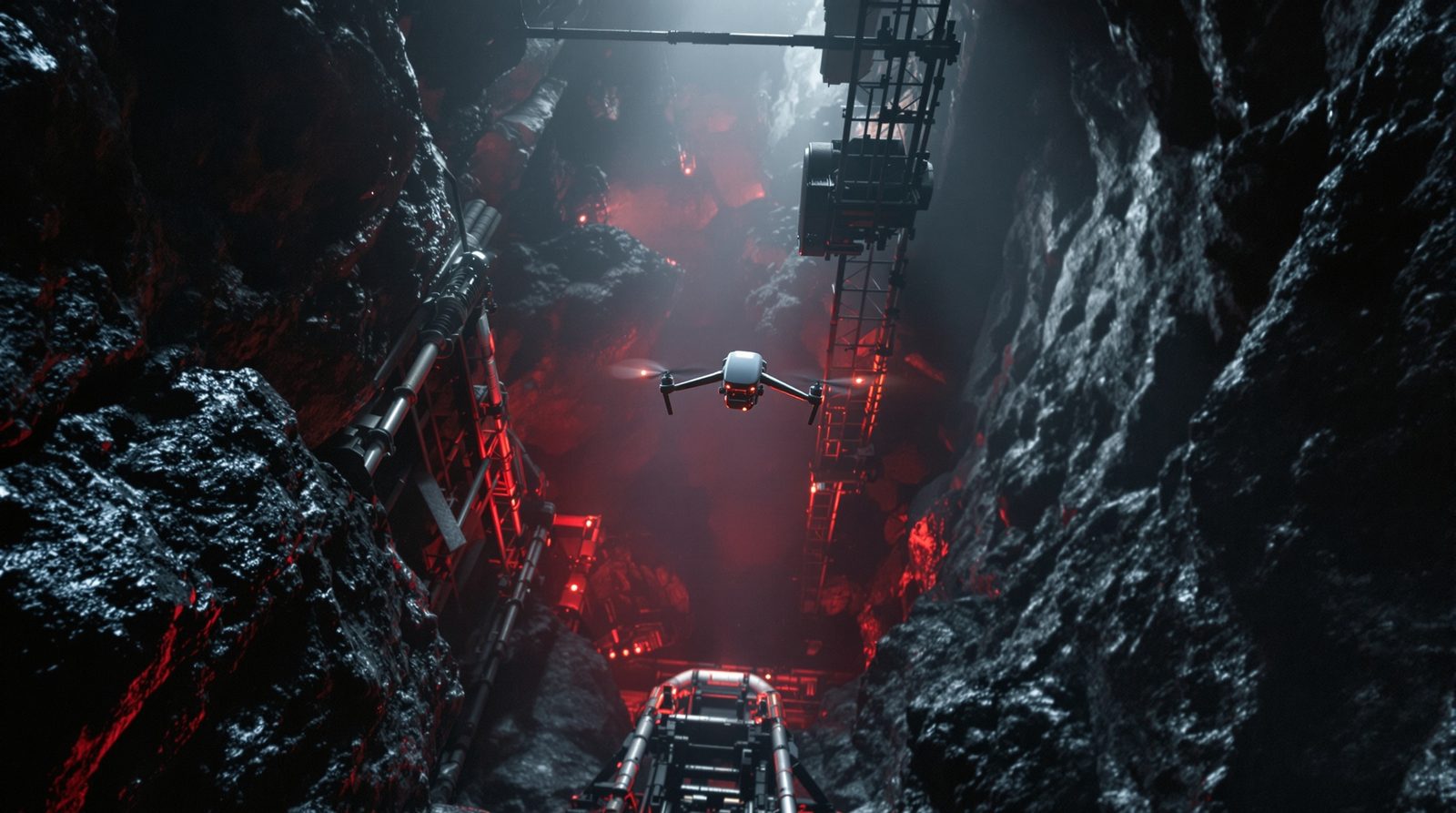










The operator main production shaft had last been fully inspected five years prior. Recent anomalies in the winder system and visual indicators from the cage had raised concern about conveyance and shaft wall integrity. A full manual inspection would have required the shaft to be taken out of service for at least 72 hours, with an estimated production loss running into the tens of millions of rand.
The client required three things. A complete, classifiable defect record of the shaft interior. An engineering recommendation on which defects required immediate action versus scheduled intervention. And a process that did not interrupt winder operation. Commercial pressure to avoid unplanned shutdown was high.
Conventional inspection methods were unsuitable. A traditional manual platform inspection would have extended the shutdown window significantly. Off-the-shelf scanning tools would have struggled with the GPS-denied environment, variable lighting, and loss of accuracy at depth. No commercial tool available at the time held accuracy over a full descent or handled classified defect reporting at shaft scale.